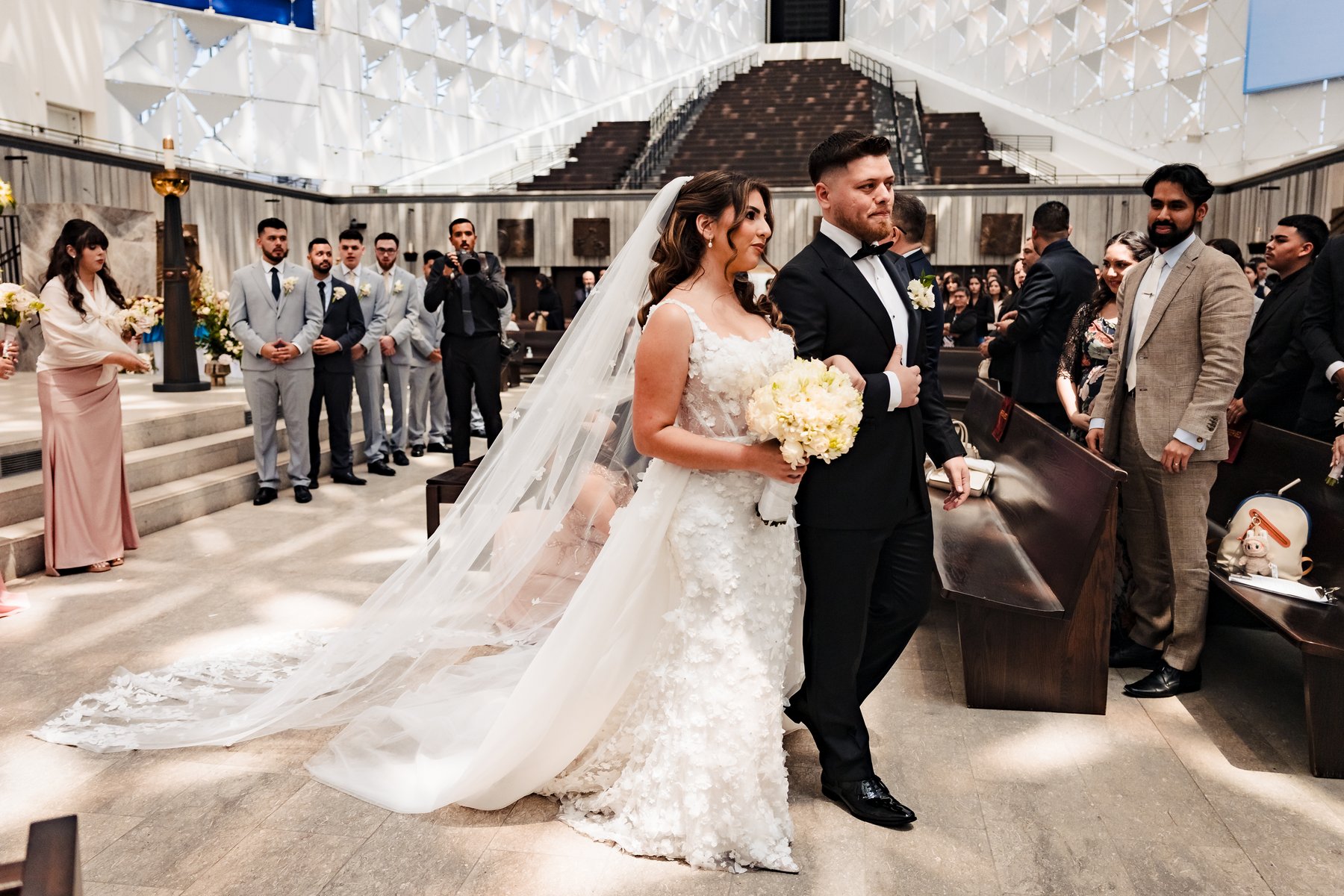
Ismael and Esme were married within the Neocatechumenal Way, a post-baptismal
catechetical path within the Catholic Church that shapes not only how a couple
prepares for marriage, but how the wedding itself unfolds. Their Nuptial Mass
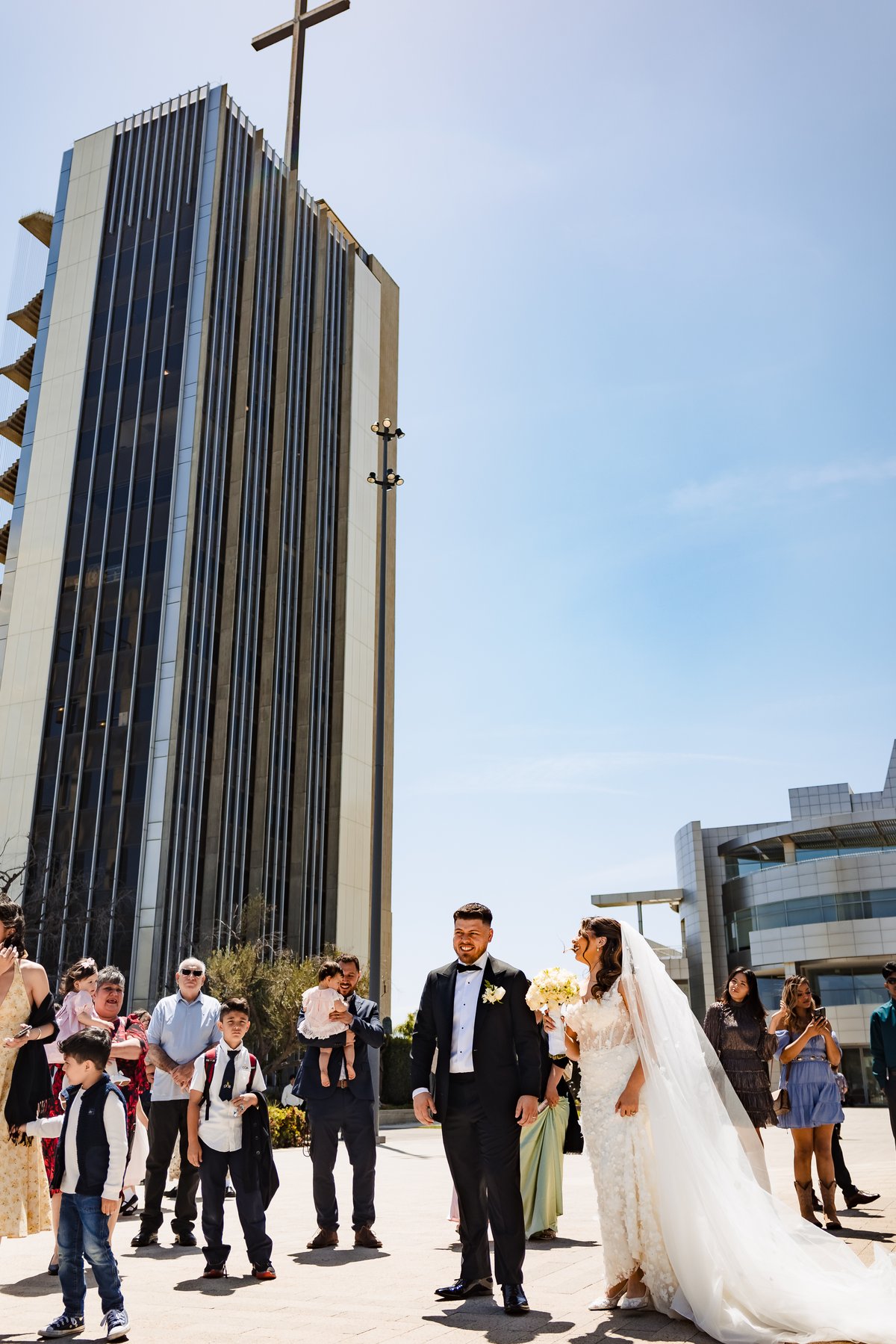
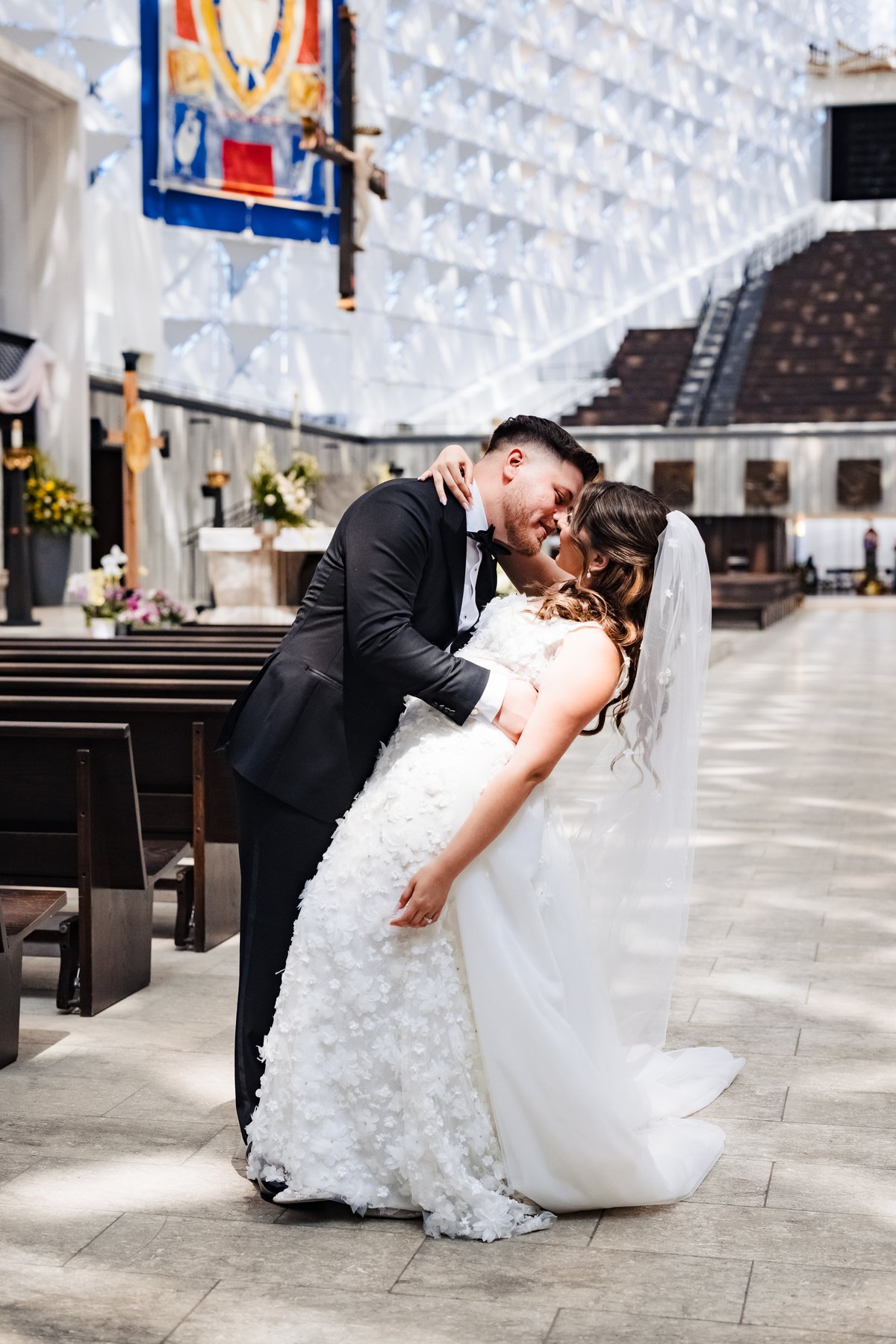
took place at Christ Cathedral in Garden Grove, the mother church of the Diocese
of Orange, celebrated by the Most Reverend Timothy Freyer, Auxiliary Bishop of
Orange — a level of liturgical formality most wedding photographers never
encounter, let alone prepare for.
A wedding like this raises the stakes before a single photograph is taken.
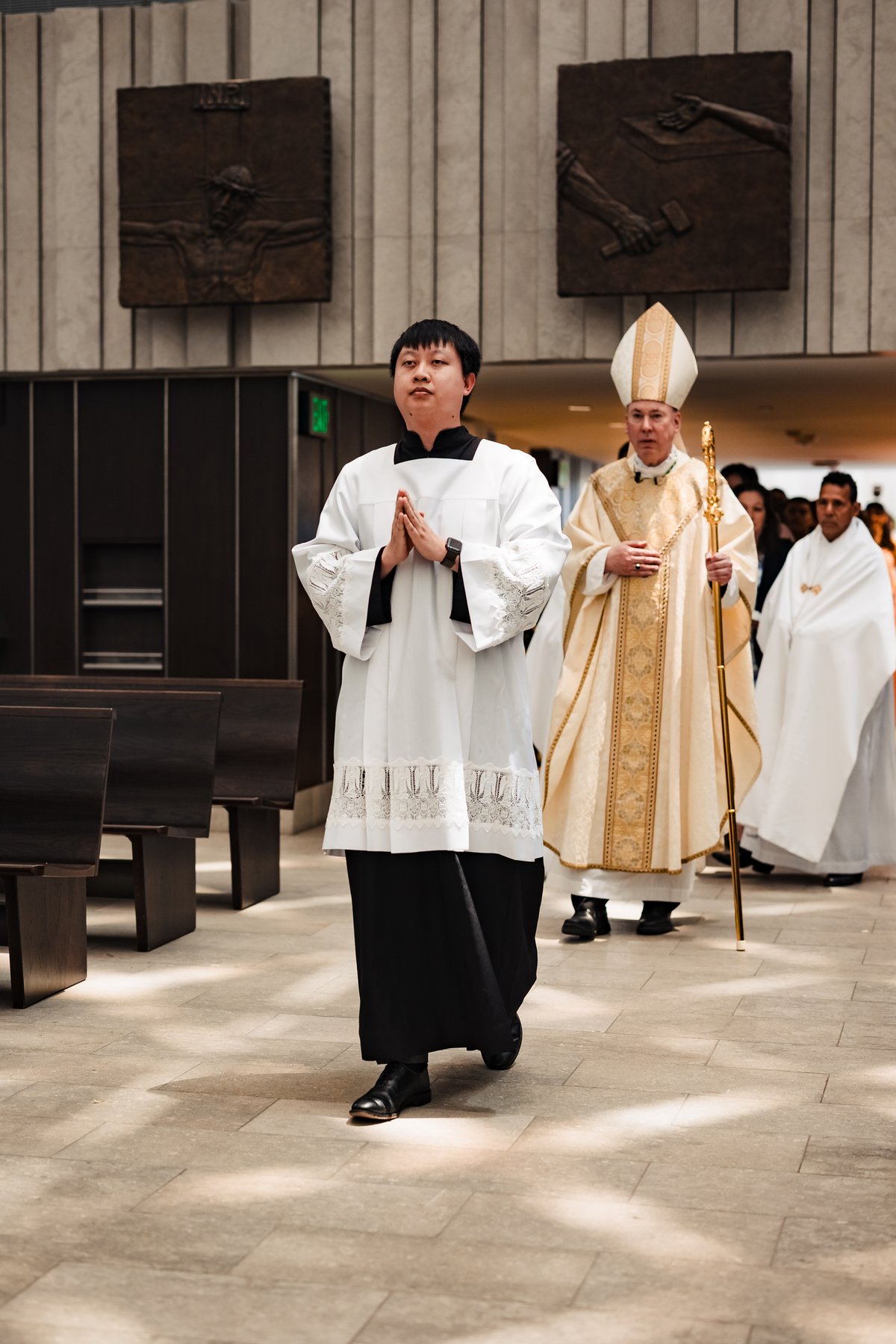
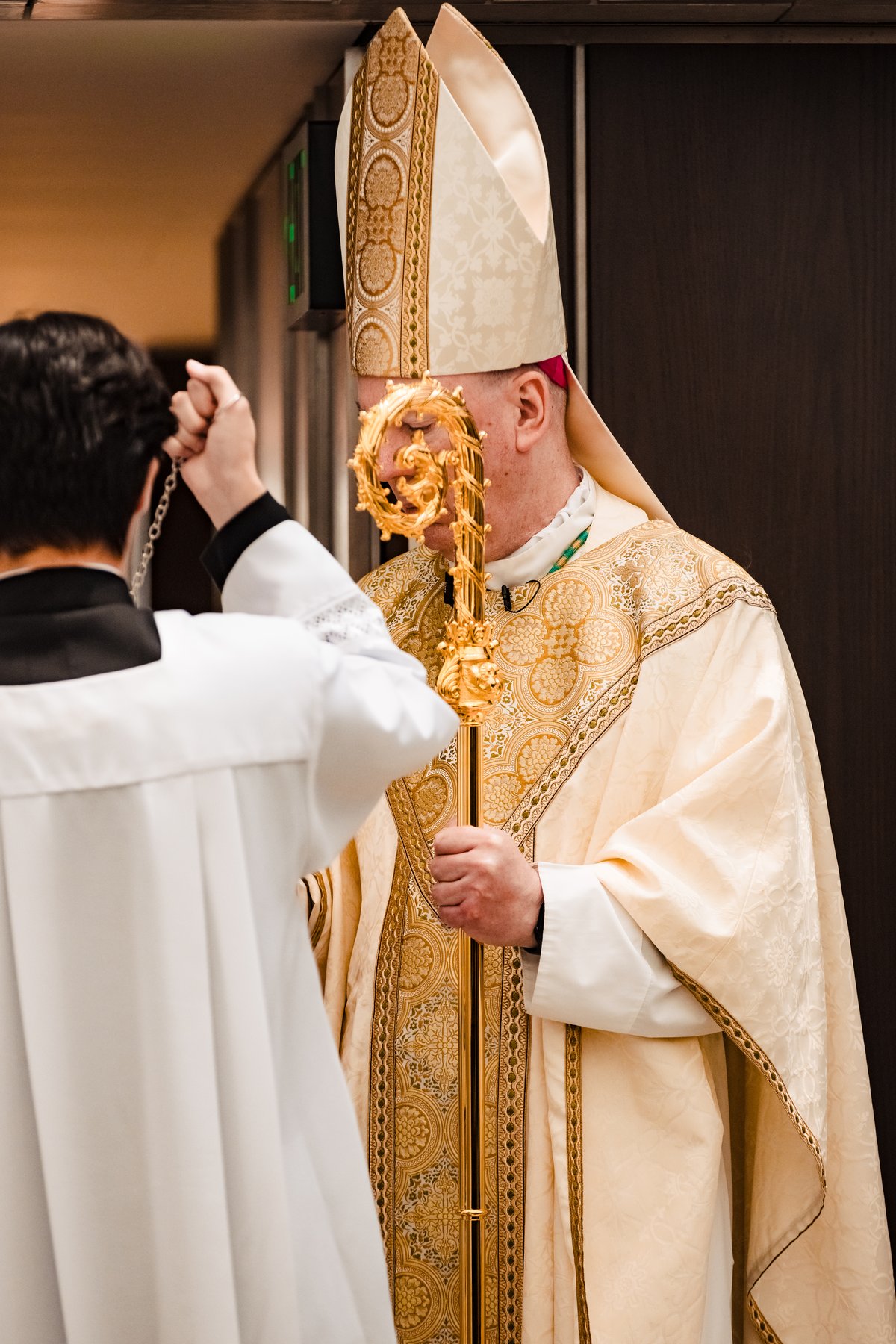
A pontifical Mass follows its own choreography — the bishop’s
procession, his vesting, the specific order in which he approaches and
incenses the altar — all of it layered on top of the particular customs
of the Neocatechumenal Way itself. Most photographers walking into a wedding
like this would be learning the choreography in real time, trying to catch up
to a Mass that waits for no one. We weren’t learning it. We already knew it.
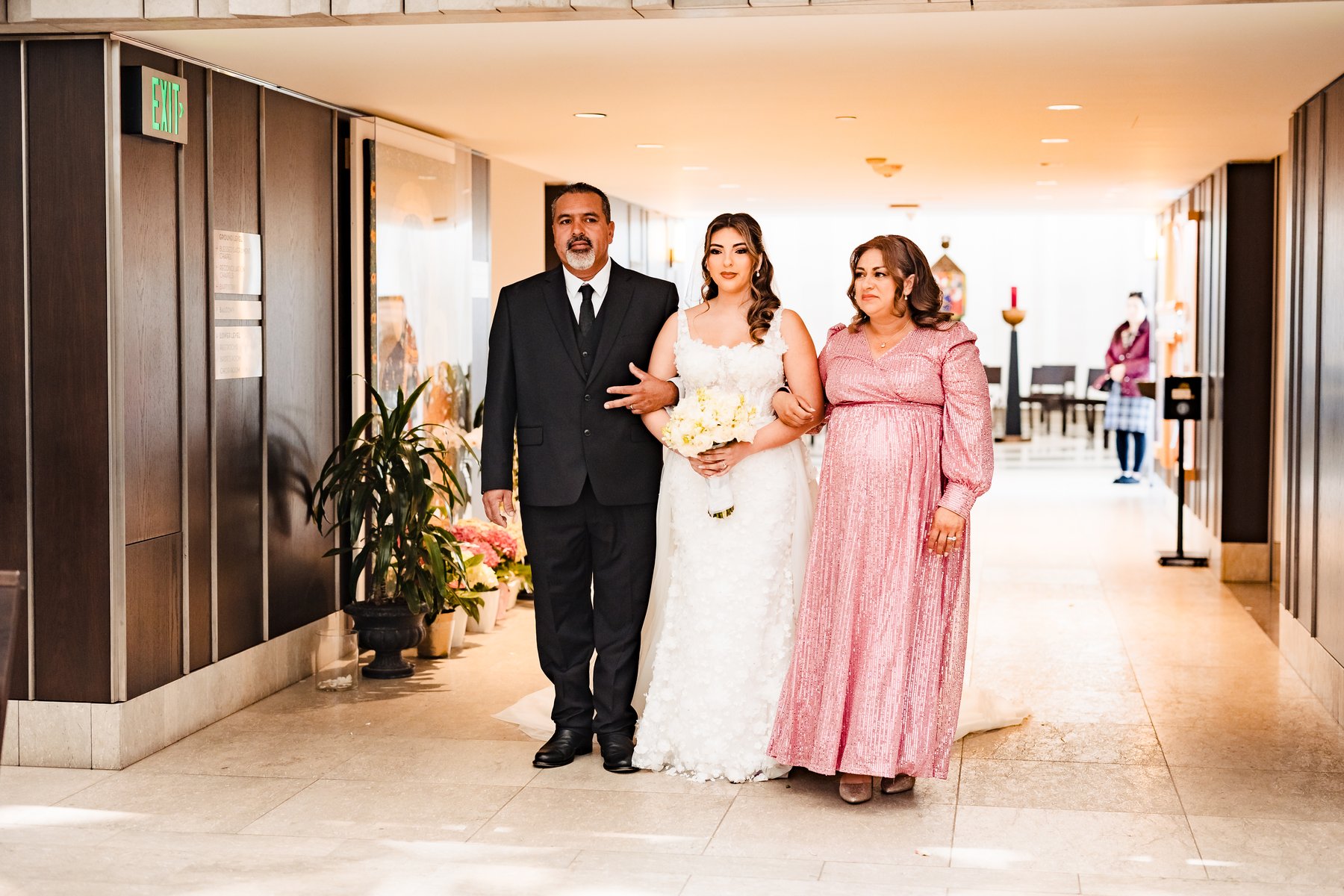
The first place that knowledge mattered was the processional. We knew Esme
wouldn’t be escorted down the aisle by her father alone — in the
Neocatechumenal tradition, both parents often accompany the bride, walking her
in together. It’s a small detail on paper, but it completely reshapes the
visual composition of the entrance: three people moving as one unit instead of
two, a different rhythm, a different frame. A photographer expecting a
conventional processional would either miss the moment entirely or catch it a
half-second late, still adjusting to what they’re seeing. We were already
positioned for it, because we knew it was coming.
From there, the Mass itself asked for a different kind of attention than a
typical Nuptial Mass does. A bishop celebrating brings his own retinue, his
own vestments, his own procession into and out of the sanctuary — and
every one of those moments has a correct place to stand and a wrong one. We
positioned to capture the incensation of the altar and the bishop’s
movements through the sanctuary without ever stepping into a sightline that
wasn’t ours to occupy. In a Mass this formal, there are more people in
the room whose view matters more than the photographer’s — the
concelebrating priests, the servers, the family seated closest to the altar
— and knowing where you’re allowed to be is as important as
knowing where to point the camera.
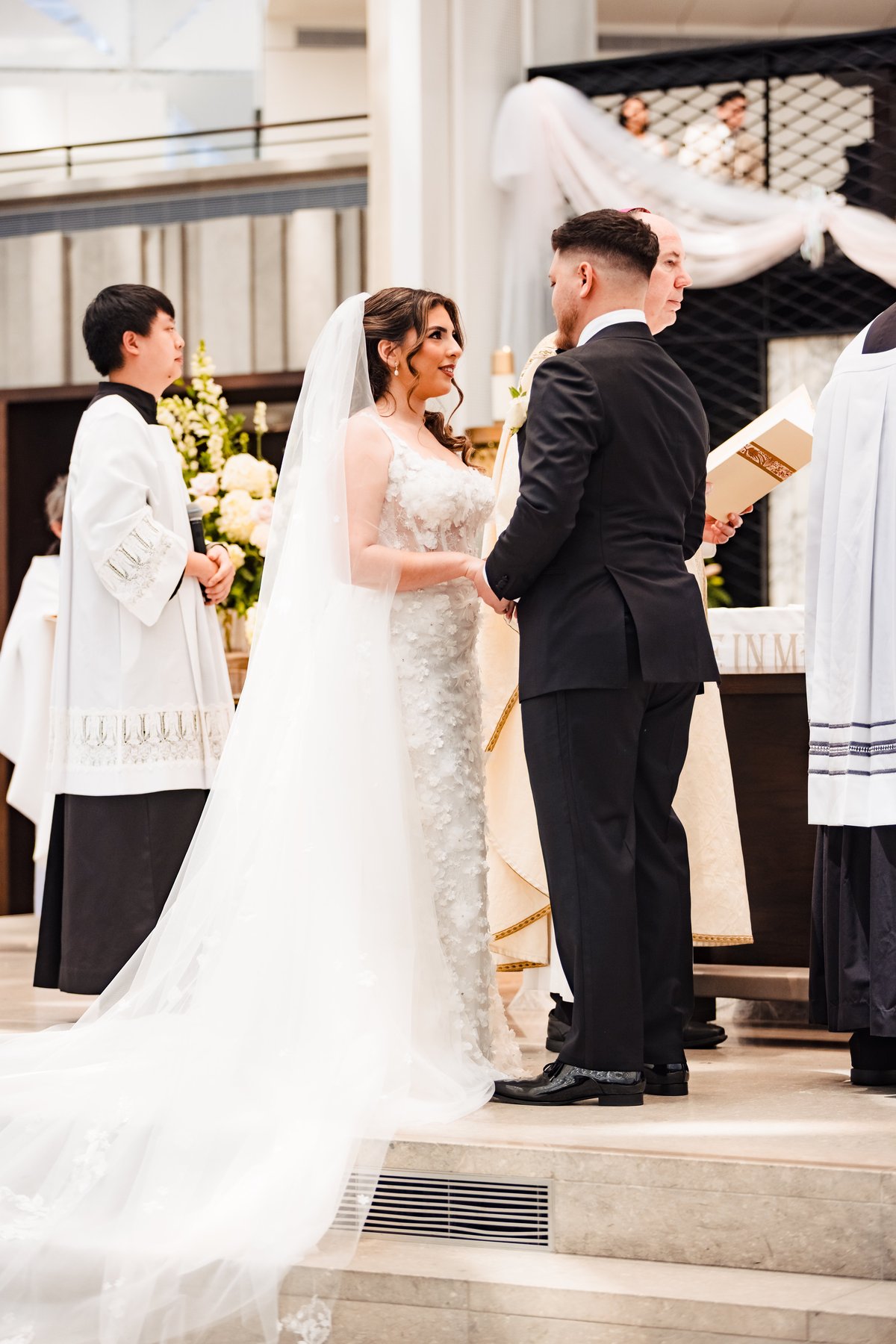
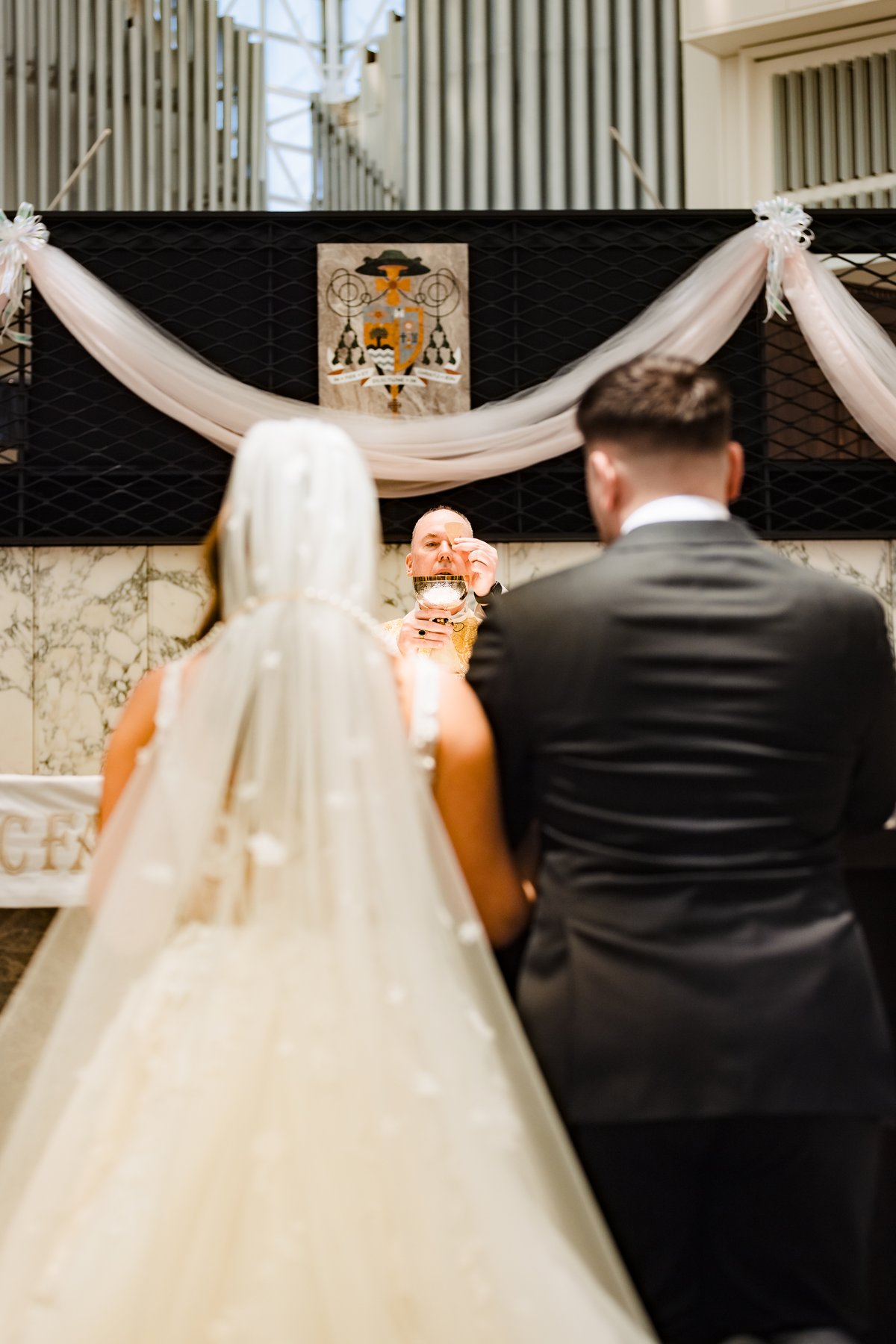
That discipline is what let us capture the quieter moments too: the exchange
of consent, the nuptial blessing, the consecration itself. None of those
moments were staged or re-created for the camera. They happened once, the way
they were always going to happen, and we were simply in the right place, at
the right distance, already knowing what was coming next.
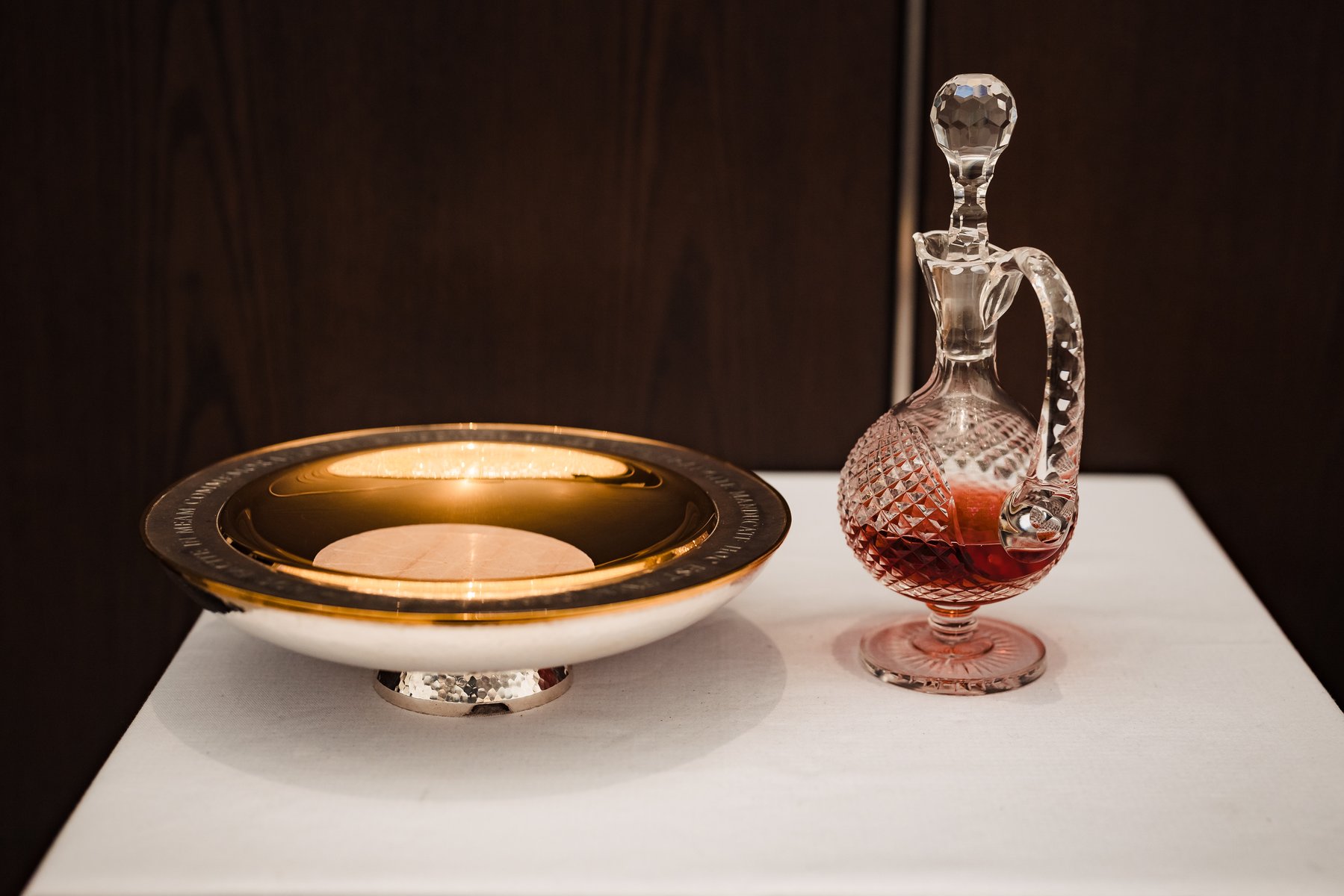
Even the smallest details carried weight. The vessels used at the altar
— the paten, the cruets — are easy to overlook in a wedding gallery,
but in a Mass this formal, they’re part of the story too: a reminder that
everything happening at that altar follows a order established long before
either family arrived.
That’s the difference between documenting a wedding and documenting
this wedding. The Neocatechumenal Way isn’t something we studied
for this one occasion — it’s a tradition we understand from the
inside, and it shows in the photographs we were able to capture without needing
anything explained to us.
A wedding like this is a reminder of why we do this work the way we do it.
The camera is there to witness, not to direct — and when the people
behind it already understand what they’re witnessing, nothing sacred
gets missed in the process of trying to catch up.