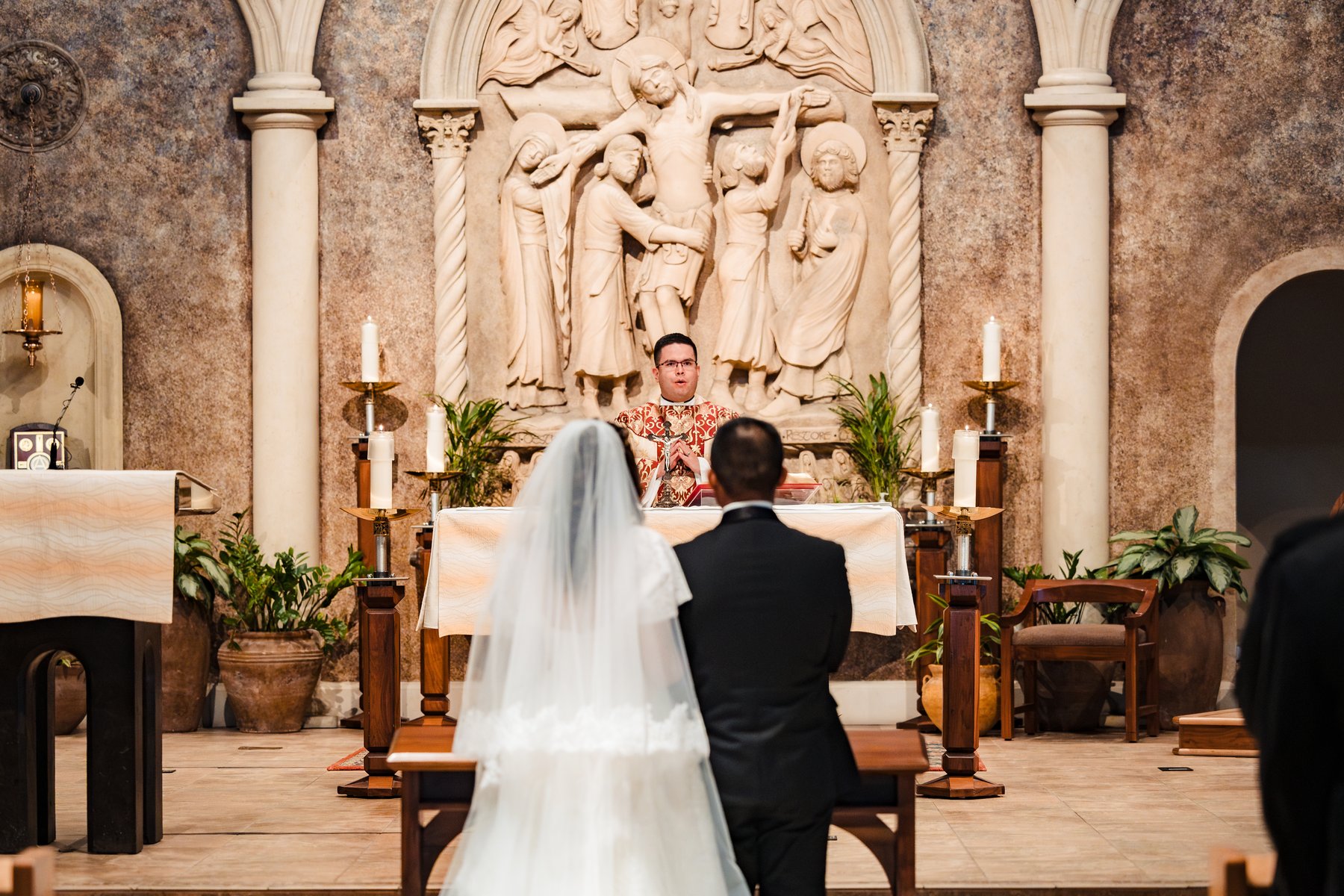
I have photographed Catholic weddings for over eleven years, and the moments couples treasure most are almost always the signs of the Sacrament itself, the ones that are easy to rush past if you don’t know what they mean.
Here are the symbols of a Catholic wedding, what the Church says they mean, and how I photograph each one. Your parish is the final word on what is allowed and when it happens, so bring your questions to your priest or deacon too.
Before the rings, before the kiss, there is the consent. In the Catholic Church the bride and groom are the ministers of the Sacrament of Matrimony. The priest or deacon witnesses it, and the Church receives it, but it is the two of you, freely giving yourselves to each other in front of God and His people, who bring the marriage into being.
It is the most important moment of the day, and it is easy to miss: no music, no movement, just two people looking at each other and speaking. I plan my position for it before the Mass begins, so I am already there when it happens.
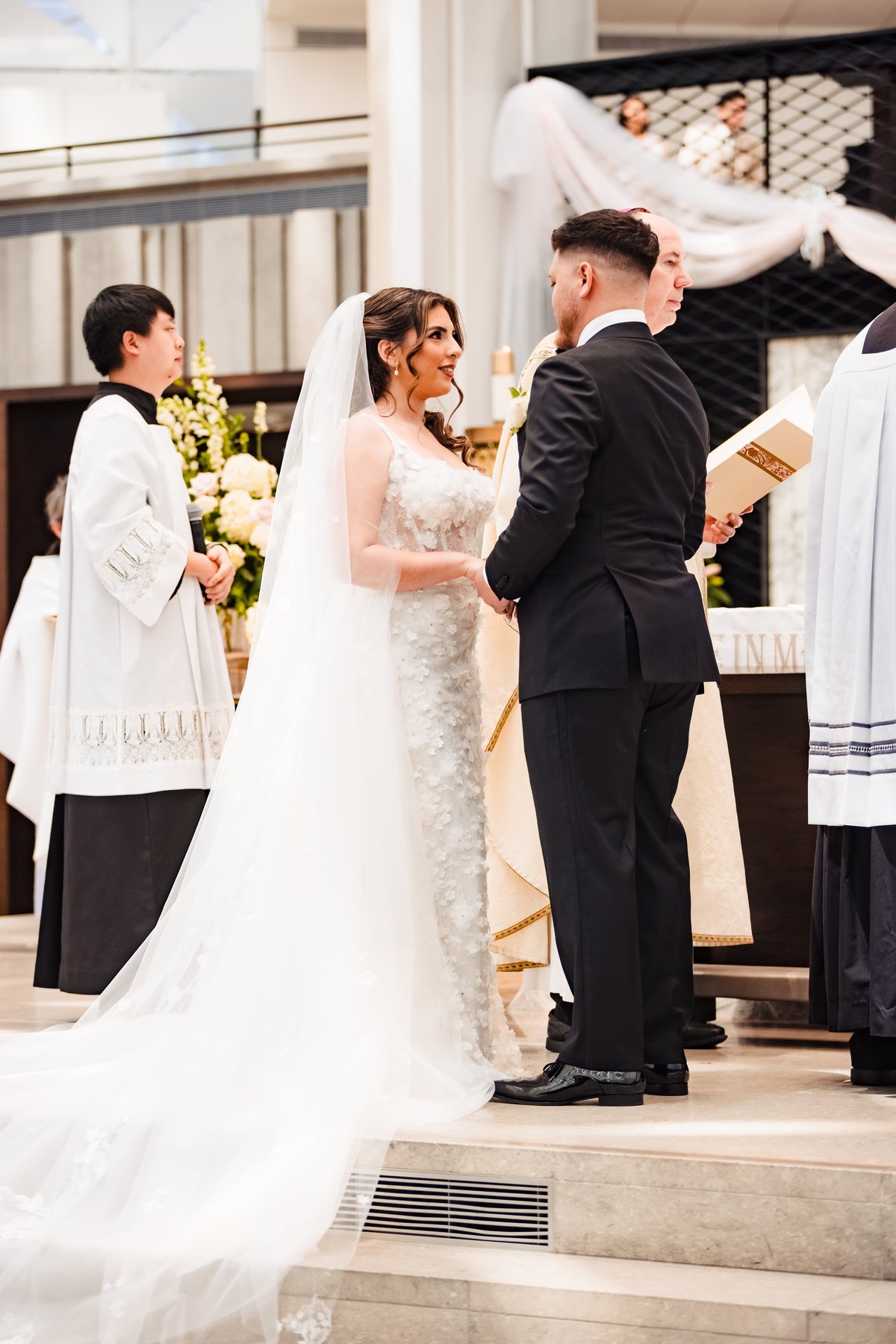
The rings are blessed by the priest, and each spouse places a ring on the other’s finger as a sign of love and fidelity. A circle has no beginning and no end, and the marriage it seals is meant to last until death.
I photograph the blessing, the hands, and the faces, because the faces are what you will want to see in thirty years.
Saint Paul tells husbands to love their wives “as Christ loved the Church and gave himself up for her” (Ephesians 5:25). That is why the crucifix is the quiet center of every Catholic wedding. Marriage is not only romance: it is a vocation to self-giving love, and the Cross shows what that love looks like.
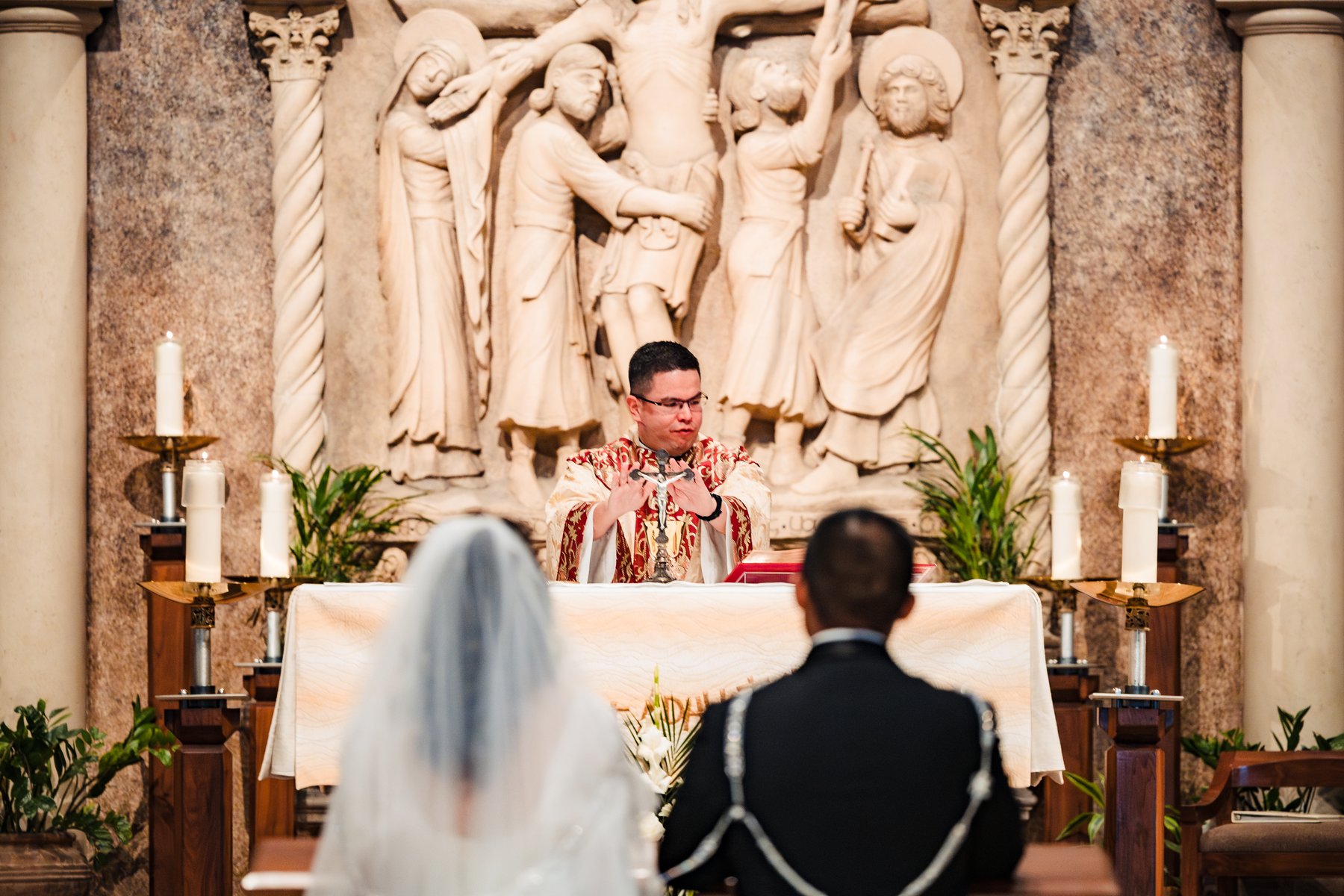
At a Nuptial Mass, after the Lord’s Prayer, the priest extends his hands over the couple and prays the Nuptial Blessing, asking God to strengthen them for the life ahead. Then the couple receive the Eucharist, often first, as husband and wife.
Your marriage begins at the altar where Christ gives Himself completely. For me, that is the heart of the day, and I photograph it without flash and from a respectful distance.
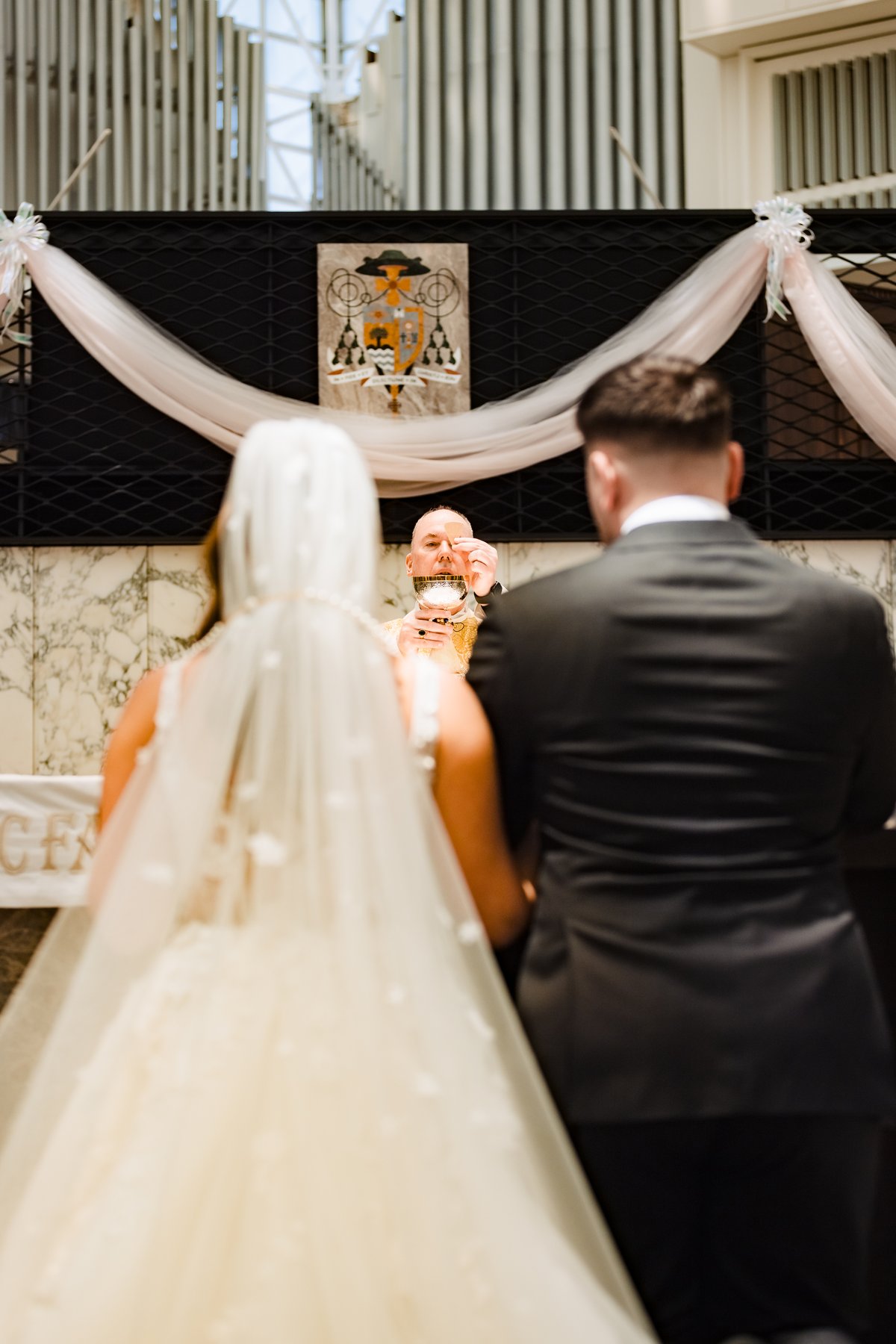
Many Hispanic and Filipino couples add these traditions, and the Church’s wedding rite in the United States makes room for them:
Every parish handles these a little differently, so I always ask when they happen and who is bringing them forward. Your padrinos are part of the story, and I make sure they are in the photographs.
It is not part of the rite, but it is one of the most beautiful moments of a Catholic wedding: the couple bring flowers to Mary and kneel to entrust their marriage to her. It often happens quickly and quietly, near the end of the Mass, so tell your photographer it is coming.
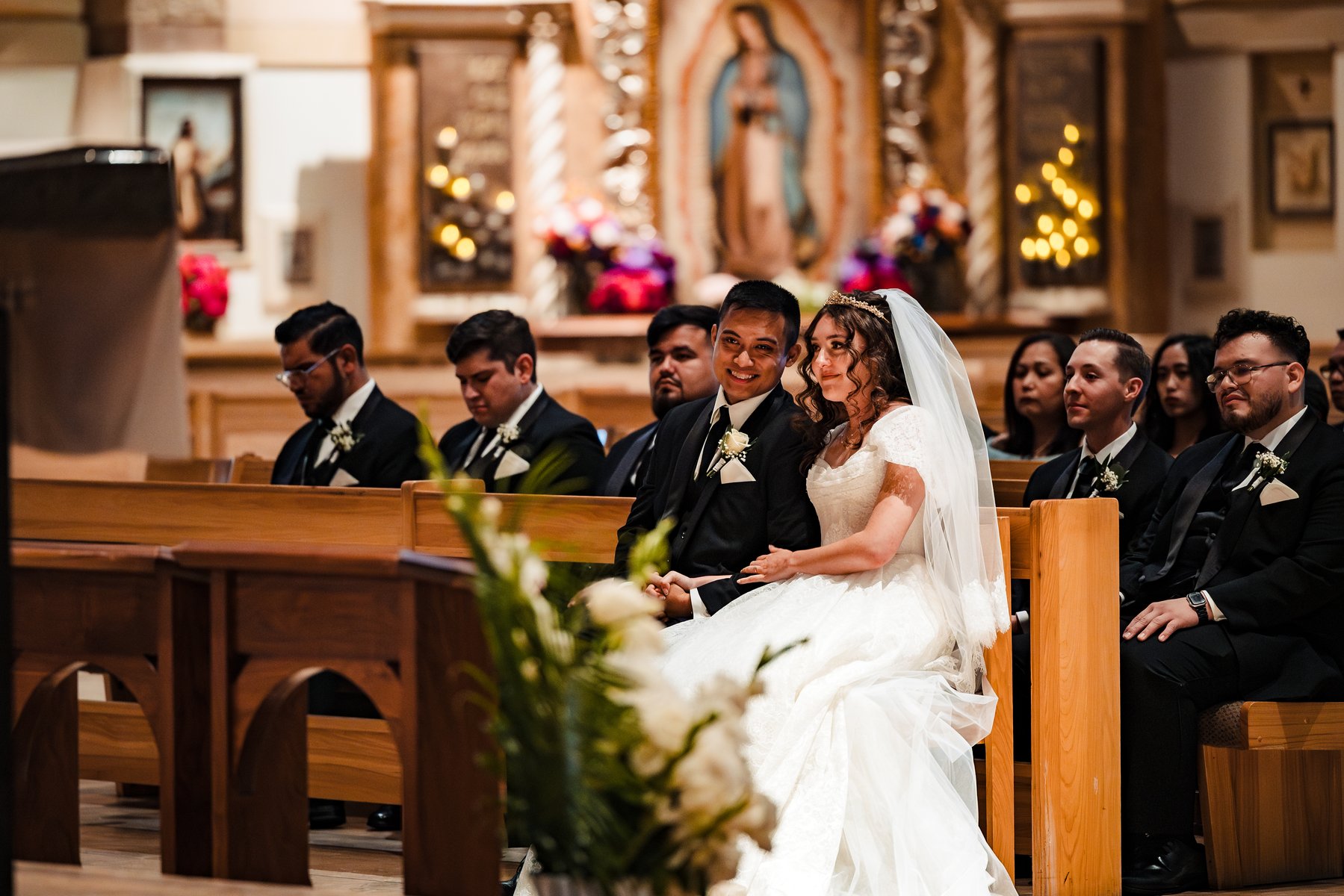
The unity candle is popular, but it is not part of the Catholic wedding rite. Some parishes allow it and many do not, especially during Mass. If it matters to you, ask your parish early. The Church already gives you a richer sign of unity: the consent, sealed in the Eucharist.
The central sign is the couple's exchange of consent: the bride and groom are the ministers of the Sacrament. Around it are the blessed rings, the crucifix, the Nuptial Blessing and the Eucharist, plus optional traditions such as the arras, the lazo and the veil, and the offering of flowers to Our Lady.
The lazo is a cord or large rosary placed around the couple in a figure eight, a sign of the bond that unites them. The arras are thirteen coins the couple give each other, a sign of shared care for their home. Both are optional traditions, popular in Hispanic and Filipino weddings; ask your parish how it includes them.
The unity candle is not part of the Catholic wedding rite. Some parishes allow it and many do not, especially during the Mass, so ask your parish before planning it.
Many couples bring flowers to a statue or image of Our Lady after Communion or at the end of the Mass, entrusting their marriage to her care. It is a devotion, not part of the rite, and it is one of the most moving moments to photograph.
Planning your wedding Mass? Read The Sacrament and What Is Pre-Cana?
Your parish, your date, and the traditions you’re bringing. I respond personally within two business days.
Send an Inquiry